PART Four
Joint Force Employment Across the Domains
Joint Force Employment Across the Domains
The Western contemporary command model is inherently joint, with operational-level command typically exercised through joint structures (as seen in US, UK, and NATO models)4. At the tactical level, however, command generally reverts to
single‑service, component-based arrangements.
In contrast, in 1944 the Supreme Allied Commander exercised command over all deployed Allied forces. Below this strategic level, command largely reverted to a single‑service model. Nevertheless, there were several examples of joint activity in practice, albeit limited in scope and focused primarily on the land/air domain.
Maritime (surface).
Amphibious/littoral operations are essentially a maritime endeavour and are rightly acknowledged as among the most complicated. They involve the fusion of combat activity across all domains and can involve a complex command-shift when the balance of investment in the operation transitions from the maritime to the land domain (in the modern environment command may remain afloat).
1944. The maritime element of the 1944 Normandy landings was vast and involved vessels, aircraft and personnel in a wide variety of roles. The complexity was Byzantine, choreographing a huge fleet to arrive in the Amphibious Operations Area (AOA) off the Normandy coast simultaneously, preceded by advanced force teams, many of them landed from submarines to fulfil a multitude of tasks: confirming sea-bed profiles, obstacles and to mark beaches as well as providing swept, mine-free channels for assault craft. For Overlord, the landing force (multiple tens of thousands of troops) was delivered in specialist assault landing craft supported by fire support platforms, air-defence vessels, anti-submarine defence, service support (including casualty receiving ships) and command vessels. The absence of accurate long-range strike systems in the German inventory meant that shipping could come relatively close inshore at minimal risk (other than from occasional Luftwaffe attack).
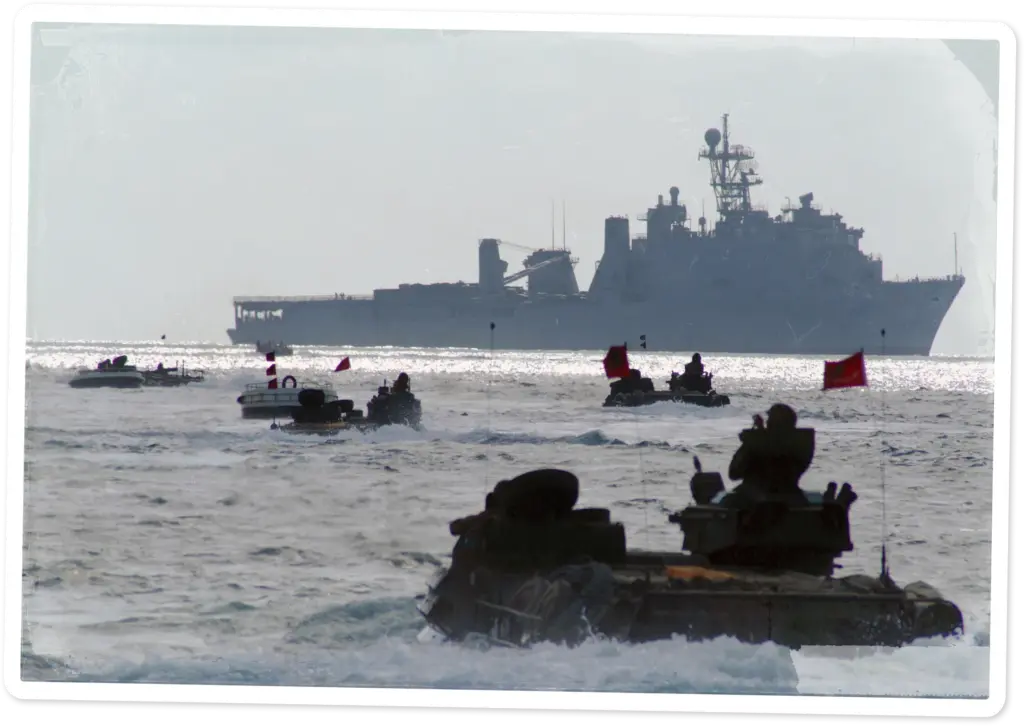
Most of the first wave of the landing force embarked directly onto small assault craft and sailed to the landing beaches from Southern England; there to land troops, vehicles and materiel straight onto designated landing points. These assault craft were slow, open to the elements, and poor sea-keepers. Subsequent waves were embarked upon larger vessels before transferring into the assault craft when close to the beaches. Some specialist vehicles (amphibious tanks etc.) launched from parent craft and ‘swam’ ashore, providing immediate combat support to the landing infantry.
Once ashore, assaulting troops advanced to pre-ordained objectives, achieving these to provide security to the landing area against counterattack. As soon as the beaches were declared secure, offloading activity continued at higher tempo with ships, vessels and craft moving closer to the shore. All activity on the beaches was organized and directed by naval beachmasters whose principal responsibility was to maintain tempo of activity in order to develop the bridgehead.
Today's Model
The contemporary model is very different, reflecting an altered context. The proliferation of cheap, abundant sensors linked to capable strike systems create a complex set of challenges. Anti- Access (A2) (those actions/capabilities, normally long-range, that prevent an opposing force from entering an operational area) and Area-Denial (AD) (actions/capabilities, normally of a shorter range, that are designed to limit freedom of action within the operational area) systems compel maritime platforms to sit well beyond an adversary’s Weapons Engagement Zone (WEZ – in this instance the defined area and airspace inside which an individual, platform, unit or formation has a high probability of being successfully engaged by an adversary). The standoff distances (the range from a target or objective that allow for friendly shipping to operate safe from engagement by an adversary) are thus significant and so call into question the investment in large, highly expensive specialist platforms.
Notwithstanding this, the projection of force into a hostile or potentially hostile shore may be required in order to meet strategic aims. Small, agile groups could be introduced from the sea over long distances either by submarine (usually only Special Operations Forces), fast, stealthy surface, surface submersible craft, by helicopter or a combination of all. They can be tasked with multiple possible missions from ISR through direct strike actions or deception to influence operations. These deployments would likely be augmented by unmanned systems providing ISR, fires and protection. But the central challenge for today’s commanders is in many ways the same as 1944 – to propel a force from the sea onto an occupied landmass, ensure its survival, sustainment and provide it with the necessary command and intelligence support along with the means of manoeuvre, fires and protection.
Maritime (Subsurface)
1944. Sub-surface infiltration has played a role in littoral operations in multiple campaigns and has developed significantly in recent years. Throughout both World Wars, submarines offered the potential for ultra low-profile infiltration and exfiltration of personnel and high-value stores. This can be illustrated by Operation Frankton in 1942, when 6 pairs of men from the Royal Marines Boom Patrol Detachment were infiltrated into the Gironde Estuary in France, launching kayaks from submarines to paddle upstream and successfully attack shipping in Bordeaux harbour. Special operations forces have maintained the capability to launch from and recover to submarines however, these tend to be for tasks of strategic value. This practice was significantly enhanced by the development of the Swimmer Delivery Vehicle (SDV) in the early 1980s.
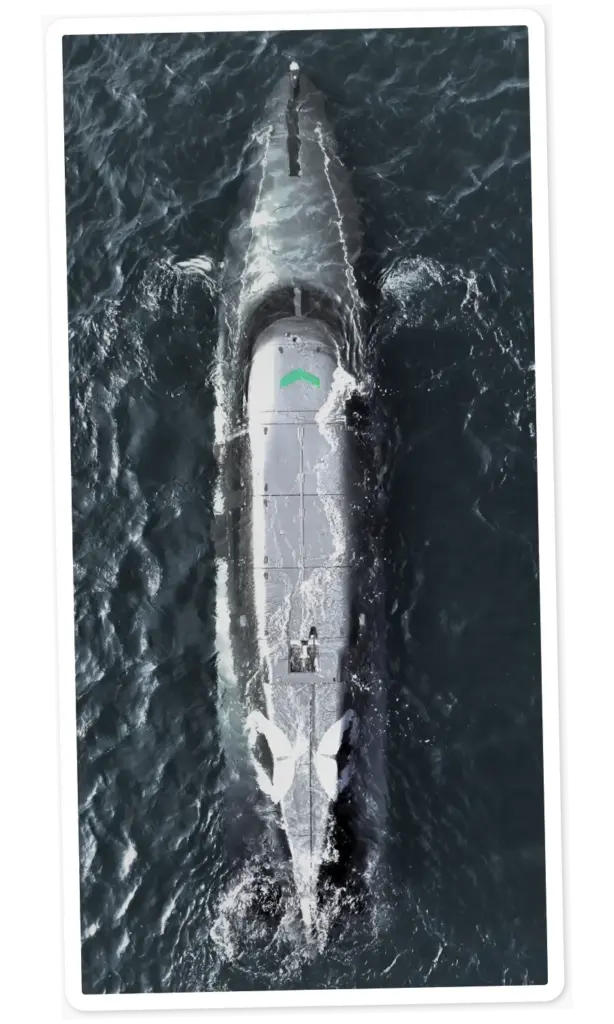
Today's Model
Capabilities such as the SDV are expensive, slow, limited in range and few in number. They are also reliant upon nuclear submarines (SSN) or other strategic assets for their deployment. The advent of lower-cost, more capable platforms capable of operating at speed on the surface as well as submerged increases the options for commanders of maritime, joint and special operations and so adds significantly to the inventory of systems for prosecuting littoral operations. Such dual-domain craft which can operate at range to create effect in the littoral could dovetail with emerging maritime operating constructs such as the US ‘Distributed Maritime Operations’ (DMO)5 or the UK Royal Navy’s ‘Protean Force’ concept, where forces disperse to increase survivability and combat effectiveness. One example of a dual-domain craft that functions like this is SubSea Craft’s VICTA6.
Land
Landing forces can be generated from any suitably trained and equipped body and although historically, many states have invested in specialist naval infantry or marines, land campaigns are usually conducted by land formations – Army. In an amphibious operation, the key differentiator from other operations is the transition from the maritime to the land domain.
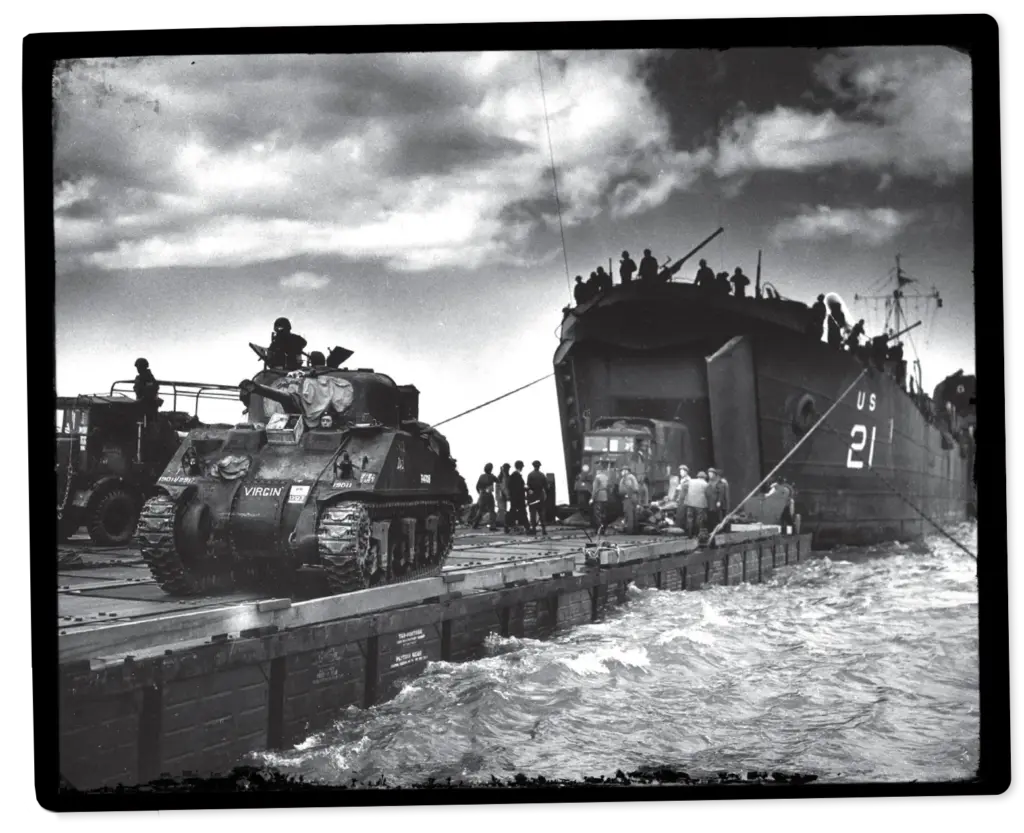
1944. Based upon the requirement to generate mass, the landings involved pushing thousands of men quickly over the beach, so the transition from sea to land was physically reduced to the bare minimum, moving troops via simple assault landing craft quickly from ship to shore. Troop training in advance of Operation Overlord was minimal – sufficient only to allow fully trained infantry to be able to embark into craft and disembark from the craft onto an assault beach safely. This extended to the drivers and crews of vehicles (including armour) where training was a little more comprehensive. Preparation of men and equipment was rudimentary and focused largely upon vehicles with some waterproofing of personal equipment and weapons possible although investment in this was quite low. Specialist equipment did, however, feature. Large tank-landing craft (60m; c300 tons) were developed and built in order to minimise the friction of navigating heavy equipment to the shore.
Specialist waterproofed vehicles such as the DD tank, Buffalo and DUKW which could independently ‘swim’ were also developed albeit the DD tank was a ‘one-shot’ vehicle whereas the Buffalo and DUKW could transit into and from the water continually. Once troops had landed, immediate objectives would be seized and command of the landing forces transferred to the land formation. The nature of Operation Overlord meant that the initial desired effect was to generate sufficient combat power ashore to prevent a counterattack by the Germans and thence to create the conditions for a land campaign culminating in the defeat of Germany.
Today’s Model
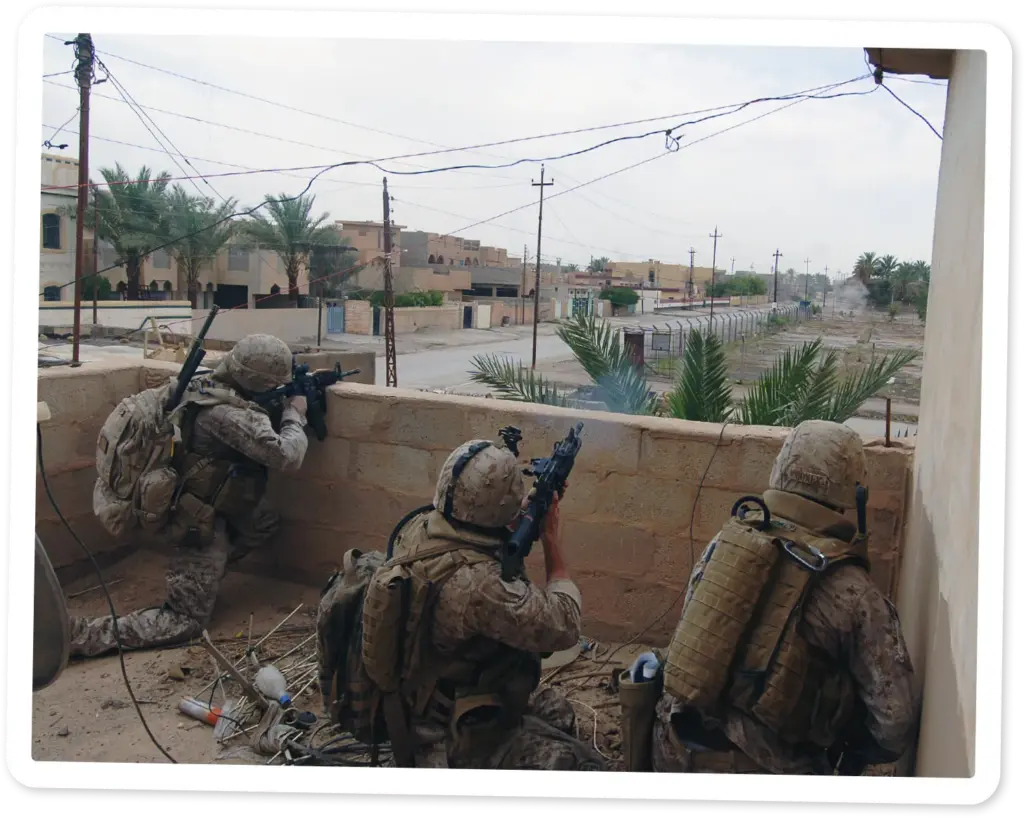
The contemporary picture is, again, very different where mass is, in the main, not a feature and there is a high likelihood that the force will comprise an assortment of manned and unmanned remote and autonomous capabilities. A small force with a mix of capabilities, able to operate on land and at sea can achieve effect out of proportion to its scale and as such, is likely to complicate the adversary response. As previously noted, facing the likely threats from massed, low-cost sensors linked to long-range strike systems, today’s littoral forces are compelled to disperse and disaggregate, relying on digital, secure integrated networks to access different capabilities remotely. This will likely include specialists in ISR, including the operation of remote and autonomous systems; fires – accessing the full panoply of capabilities available from organic individual light weapons through to land attack systems including fast air; manned and unmanned mobility systems; secure, digitized communications systems; and medical support.
This confers a different set of challenges upon the landing forces as the skills required to be able to fulfil these functions are considerable and are supplemented by the requirement to operate in small groups and at long ranges. This implies that the contemporary task is possibly beyond the scope of the average infantry soldier and is more closely suited to specialists, warranting very high levels of fitness, self-reliance, adaptability and initiative. The USMC have recognised this and, like the RN’s emerging Commando Force, are investing in the capability, focusing on broadening the skills of the individual marine, fire team, squad and platoon. Whilst there is possibly a higher cognitive burden for today’s troops, this reflects the reduced mass and scale of contemporary and future operations and their focus upon leveraging technology. There is, equally, some similarity between the approach adopted 80+ years ago and today – the requirement to reduce the burden upon participating forces to the very minimum. This is illustrated by the broad commonality of equipment and components in 1944 and the adoption of simple commercial games controllers for use today. Today’s landing force could be deployed independently into hostile terrain over long range and possibly separated from other friendly forces. These small teams would likely be commanded locally by junior leaders reporting via secure digitised communications to a remote C2 hub. They would be equipped with a broad assortment of sensors, many deployed via unmanned vehicles at sea, on land and in the air. The team would carry defensive weapons but may include a limited strike capability – fires would likely be delivered remotely, targeted and controlled by the team. Some limited mobility is likely with lightweight land vehicles available while sustainment would be delivered by manned, remote and autonomous vehicles.
Air
Advances made in aircraft development over the period of the Second World War were among the most profound of any across the 6 years of conflict. At the outset of hostilities, the RAF fielded a mixed-bag of fighter aircraft including bi-planes. However, by mid 1945, 52 different versions of the Supermarine Spitfire had flown in action. German aircraft were similarly subject to continuous development with the Messerschmidt Me 109 fielding dozens of variants while the Me 262 was the world’s first operational jet fighter. Photo-Reconnaissance (PR) was viewed as of secondary relevance at the outset of hostilities, but as aircraft, technologies and tactics advanced, PR became increasingly important with significant impact upon the conduct of operations. The German V Weapon programme produced the first unmanned/ remote/autonomous platforms in the form of the V1 and V2. The former was a pre-programmed unmanned aircraft similar in some respects to a cruise missile whereas the latter was, to all effects, an ICBM. Developments in the air extended across aircraft types, radar, bomb-aiming, communications and weapons systems. Inaccuracy by bombers early in the war was eye-watering, with aircraft delivering weapons to within 5 miles of the target viewed as successful. Enhancements in targeting, target marking, bomb aiming and battle damage assessment improved on this markedly across the conflict.
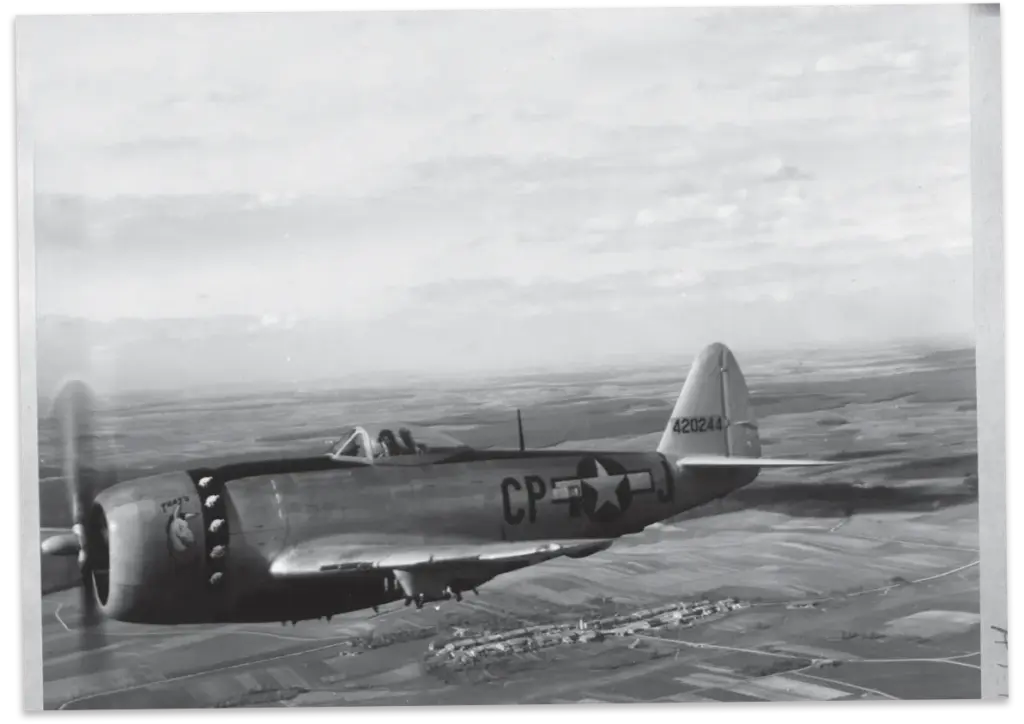
Normandy. In addition to the strategic bombing campaign targeting German cities, Allied aircraft fulfilled 3 main missions during Operation Overlord: air defence; ground attack; and battlefield air interdiction – tasks which would have chimed with Cold War aircrew. Air defence aircraft operated in patrols to engage Luftwaffe fighters and bombers to prevent German air interference in and around the beachhead. In direct support of the landings, Allied fighter bombers operated in the ‘cab-rank’ system whereby combat air patrols would loiter over or close to the battlespace either to engage ground targets of opportunity or to respond to ground forces calls for air support.
Operating with rockets, cannon and bombs, this proved devastating for the defenders. Finally, Allied fighters and bombers would strike targets in depth to deny the Germans freedom of manoeuvre, to destroy infrastructure and to prevent German counterattacks.
Today’s Model
Modern air capability is impressive; comprising an increasingly mixed suite of manned and unmanned airframes providing a variety of effects to match the functions in combat across the battlespace. But, in the same vein as the challenges which have compelled maritime operations to adapt, the same prevalence of sensors affects the conduct of aerial missions. Expeditionary air doctrine rests on the ability to project combined, interoperable, flexible and sustainable air power rapidly into any theatre. Reyling upon centralized control/decentralized execution based on robust C2 structures and a full spectrum of air power roles – from air superiority to ISR, mobility, and precision strike, it aims to provide tailored air capability to meet joint needs with the flexibility to surge when required. Air support in littoral operations is likely to come in a variety of forms, with larger, land-based systems supplementing ship-launched aircraft with the whole enhanced by a plethora of unmanned and remote systems. It is worth viewing this through the lens of 3 key areas: Command, ISR and Strike, prosecuted by a networked, integrated force. Dedicated command and control platforms enable aerial operations from range, able to maintain persistent coverage well outside adversary WEZ, able to adjust to circumstances with agility and tempo. They can be supplemented by unmanned platforms to deliver high-grade support. ISR in the modern environment consumes multiple hours of effort across assorted types. Again, larger, long-range aircraft can ‘see’ into target areas from distance and can maintain persistent coverage over long periods.
Unmanned systems can operate with relative impunity both from range and in the close battle. With the prevalence of small, low-cost systems that offer significant redundancy across a broad front, there are huge opportunities to harvest vital data. Strike options abound, whether in tactical support to a landing force or precision attacks against strategic targets. Again, the profusion of unmanned systems provides depth and breadth in the battlespace. Some of these are likely to be operated by the landing force and will deliver a variety of weapons from anti-personnel systems (grenades) through small, shaped-charge munitions to counter protected vehicles or strong points, to specialist guided weapons to enable precision attack.
The Future?
The future in all domains is likely to include a combination of capabilities that can provide effect in a variety of ways and means. This will doubtless see a focus upon the combination of both manned and un-manned capabilities in the so-called ‘Manned/ Un-Manned Teaming (MUM-T)’ operating from sub-surface through surface to land and air systems. The importance of this combination operating throughout a complex battlespace cannot be understated. The emphasis is likely to be upon discreet, low-profile systems – networked and integrated and with a variety of deployment profiles; manned, unmanned, remote and autonomous platforms combining precision, mass effect, resilience and redundancy and able to operate with impunity within an adversary’s AA bubble.
4 UK Doctrine: Joint Doctrine Publication 01(JDP 01), UK Joint Operations Doctrine dated Nov 2014
5 Chief of Naval Operations, Navigation Plan 2022
6 VICTA – SubSea Craft – Advanced Maritime Technology
Chapter 4 Picture Credits
Courtesy National Archives, NAID 176887738
USN Navy Amphibious Assault Ship (LHA/D); Courtesy National Archives, NAID 6695847
VICTA transitioning from Surface to Subsurface; © SubSea Craft
Armour disembarking from Allied Landing Ship Tank (LST); Courtesy of The National WWII Museum
US Marine Corps Fire Support Group; Courtesy National Archives, NAID 6695976
Republic P-47 Thunderbolt ground attack aircraft; Courtesy National Archives, NAID 204899512
