PART Three
Doctrine and Tactics
"Doctrine: a handrail, a guardrail; a lifejacket or a straitjacket"
- Anonomous
Doctrine and Tactics
Military doctrine can be described as a fundamental set of principles which provide guidance to military leaders as to how their forces can be employed, set out in plain language in order that it can be easily absorbed at the very lowest level.
It can be many things to many people but is at heart a ‘guide book’. Tactics are the specific methods applied to engage and defeat an enemy in combat and focus how military force is employed. It is the lowest in a hierarchy of levels at which warfare is conducted: Strategic, Operational and Tactical.
Normandy 1944
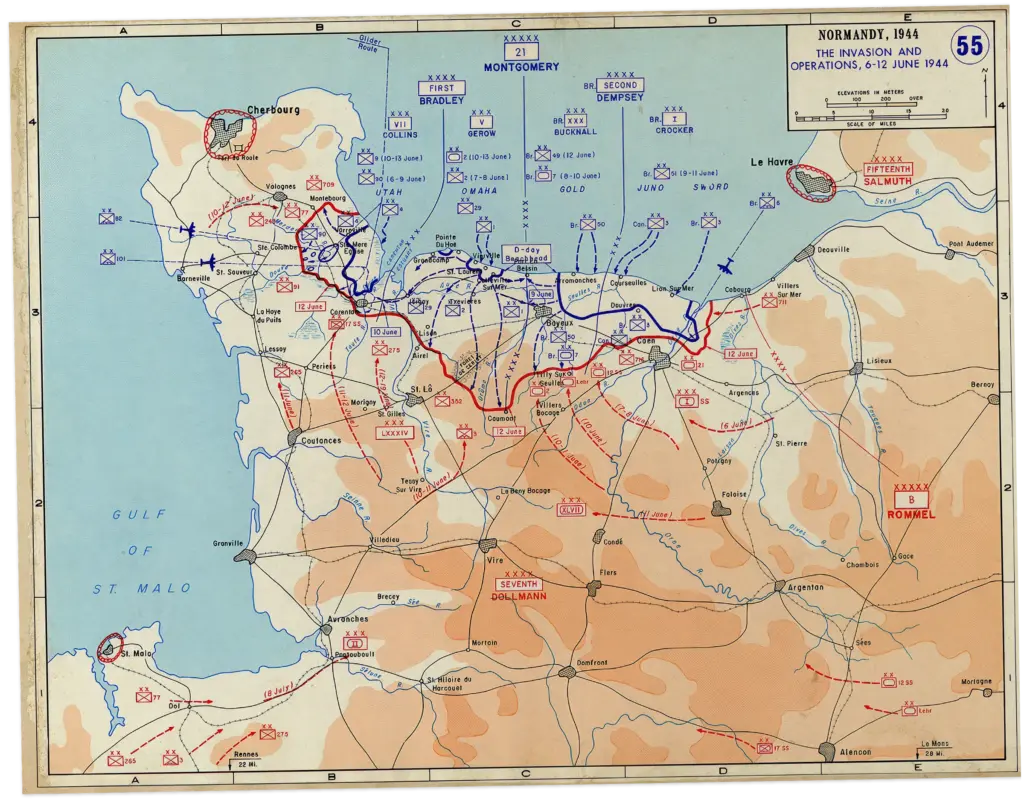
The 1944 doctrine was developed by the United States between the wars. The USN/USMC modelled possible future operations in the Pacific, shaped by the technologies available and under development at the time. Based on Landing Operations Doctrine (1938), it emphasized 6 key capabilities: Command, Control and Communication, Ship-to-Shore Movement, Naval fire support, Air support (in its myriad guises), Establishment of a Beachhead and Sustainment. It required isolation of the target, preliminary bombardment, swift combinedarms assault and immediate follow-on support. Prior to Normandy, the doctrine had been tested in Sicily and elsewhere but was far from foolproof as the landings at
Salerno and Anzio showed. The challenge for the Allies in 1944 was to create the conditions in France from which further operations could be prosecuted. While some limited local surprise was anticipated, the Germans knew that such an assault was imminent but were uncertain of its exact location. For the Allies, the shorter the distance to Berlin, the better. Normandy was selected – less well protected than the Pas de Calais but closer to the German centre of gravity (Berlin) than a landing further south. Four beaches allowed for the landing of significant numbers quickly and across a relatively broad front, complicating the German response.
Modern Doctrine
Modern doctrine has advanced significantly and any cursory glance at the current library, particularly the USN/USMC ‘Littoral Operations in a Contested
Environment’ (LOCE) and ‘Expeditionary Advanced Base Operations (EABO)3’ among others, illustrates the point well. Recognising technological advances, particularly in the Indo-Pacific area, acknowledged by the USA as the most dangerous potential flash point, modern doctrine reflects the emerging need to address Anti-Access (A2) (those actions/capabilities, normally long-range, that prevent an opposing force from entering an operational area) and Area-Denial (AD) (actions/capabilities, normally of a shorter range, that are designed to limit freedom of action within the operational area) in order to protect and maintain freedom of navigation and action.
And future littoral operations are unlikely to be constrained to the purpose of gaining a lodgement or a beachhead. They are more likely to be a part of a wider effort, potentially contributing to key maritime missions such as strike or sea control. This is likely to continue to develop as AI and the full potential of unmanned systems at sea (surface and sub-surface), on the land and in the air increasingly influence the shape of conflict.
Tactics – Then…
On 6 Jun 1944, an enormous allied fleet closed-up to the beaches of Normandy to launch thousands of small craft to land forces on the coast – aiming to generate massed combat power on the beaches rapidly. As a consequence of this principal aim, the tactical options were limited. The landings were preceded by heavy bombing of transport and other infrastructure to impede German movement and by airborne landings to seize key ground and protect the flanks of the lodgement. The landings were possible because weapons ranges and effectiveness allowed for them, but heavy casualties were anticipated and there were few tactical alternatives.
…over time
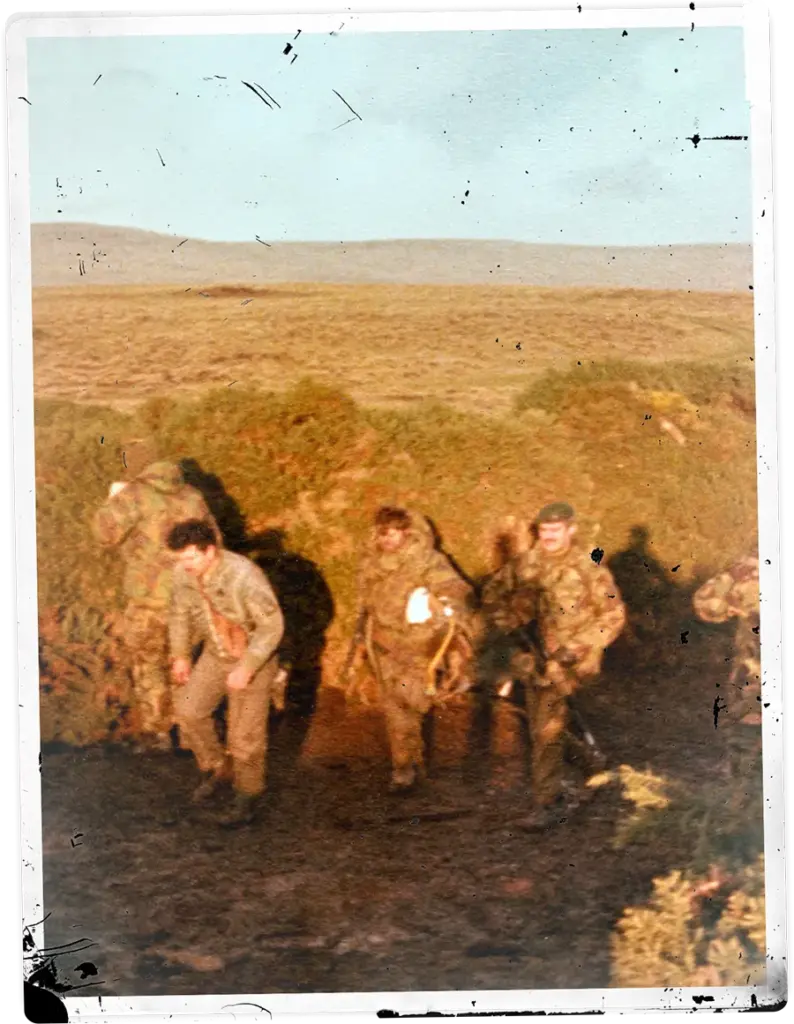
Since 1944, Allied thinking has adapted. While the USA maintained the capability to project force at scale, other NATO allies’ ability to do so declined and so, the 1980s, the UK, for one, tended to ‘..go where the enemy isn’t..’, illustrated by the landings in the Falkland Islands in 1982 – in other words: avoid enemy strengths, a defining flavour of the contemporary model. The advent in the late 1980s/early 1990s of ‘Over the Horizon’ operations and ‘Ship to Objective’
manoeuvre saw forces launched from longer range with large platforms held well out of reach of the coast. This had the benefit of reducing risk to large, specialist ships and, from greater stand-off distance, influencing a much greater area of the littoral and thus complicating the response of the defender.
“Tactics are the steps from which operational leaps are made; strategy illuminates the path”
- Alexandr Svechin : Russian/Soviet General and Strategist
…and Now
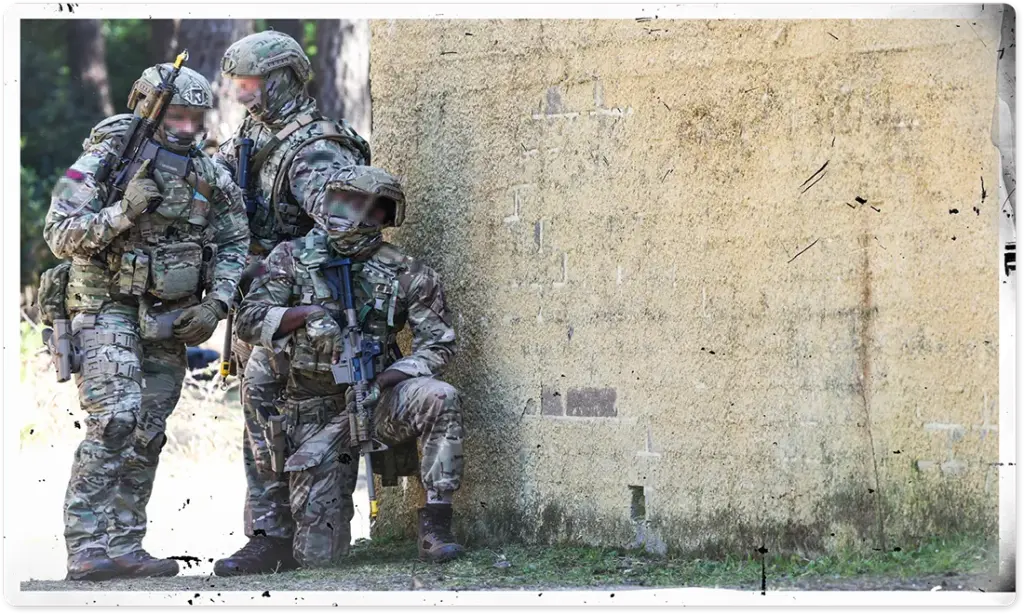
1944 tactics would be unthinkable in contemporary conditions in anything but the most benign threat situation and tactics have developed over time to match the emerging threats from widely deployed and capable sensors, to the current model which sees the employment of small, agile groups deploying at great range from their objectives in a distributed fashion. Deployment could be via a variety of means: surface vessel, aircraft (especially helicopters), small craft, submarine or a combination of all four and will undoubtedly involve a combination of manned and unmanned systems.
This avoids investing in a lodgement (an ‘iron mountain’), a la Normandy, instead focusing on leveraging numerous long-range autonomous/remote systems to achieve effect in the battlespace. This is a significant deviation from the 1940s example but reflects better the need to apply force more cautiously and, in doing so, to avoid mass. It also seeks to minimise the potential for large-scale casualties, exploit to the maximum the benefits which accrue from the ‘Manned/Unmanned Team’ (MUM-T) and integrate secure, digital systems that can achieve effects across all the domains. But it remains, ultimately, a case of putting individuals in harm’s way in an adversary’s back yard. The same bravery, resilience and willpower is needed as was the case in 1944!
3Expeditionary Advanced Base Operations (EABO) Handbook,
Considerations for Force Development and Employment, 1 June 2018
Chapter 3 Picture Credits
- Public Domain, https://commons.wikimedia.org
- Public Domain, https://commons.wikimedia.org
- Falklands 1982
- Members of 40 Commando Royal Marines and Army
Commandos taking part in PROJECT HERMOD LIVEX. Contains public
sector information licensed under the Open Government Licence v3.0.
