PART ONE
Prevailing Geo-Strategic Environment
6 June 1944 represented a turning point in a global conflict of epic proportions, establishing the conditions by which, in one of 3 key theatres, one group of protagonists would prevail against another. Of those three theatres, two featured decisive operations which were fundamentally joint (involving elements across the key domains – sea, land, air) and which involved multiple large scale
amphibious operations.
Prevailing Geo-Strategic Environment
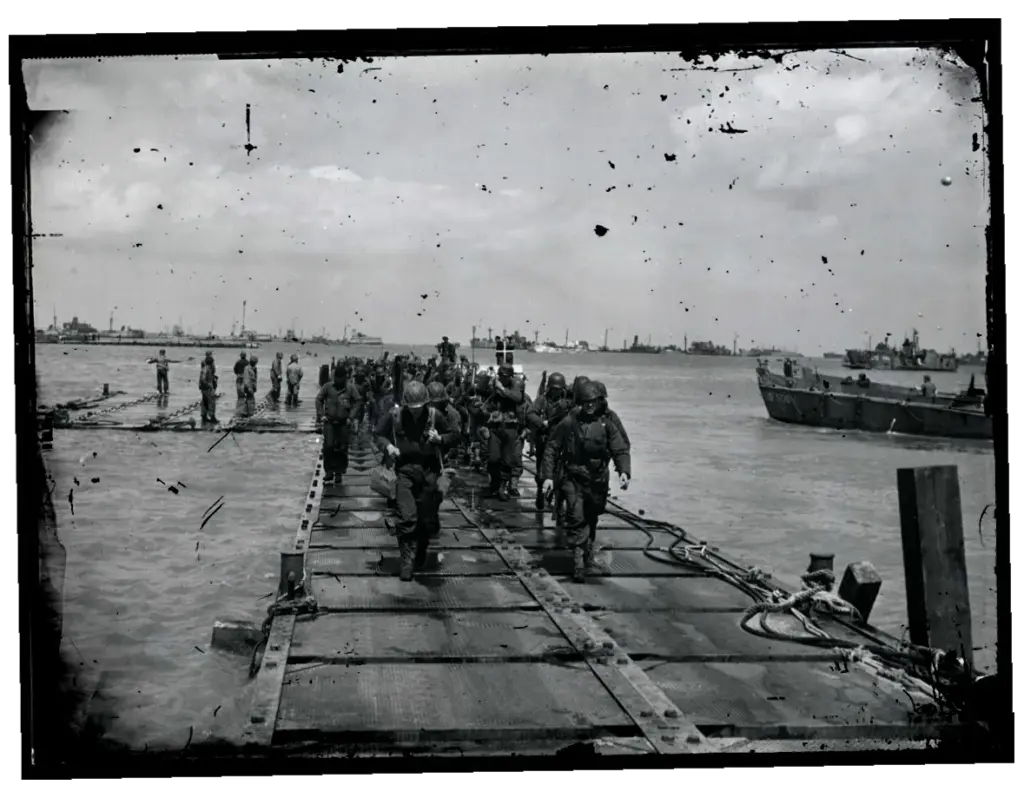
D-Day 6 June 1944.
Operation Overlord was a military assault conducted by Allied forces in June 1944 that involved landing over 160,000 men and their equipment on the Northwest Coast of France. The purpose of Overlord was the creation of a lodgement or bridgehead on the European landmass from which operations could be conducted to defeat the Germans. The landings represented a turning point in the Second World War, bringing to bear the full weight of the Allied forces, backed by the industrial heft of the United States.
Comparison with today
In many respects, this 1944 Allied endeavour looks obsolete when seen through today’s lens, due to the slim likelihood of anything on a scale similar to that in Normandy being required by western forces. However, in modern littoral operations, we should not underestimate the effectiveness of force projection of the kind shown here, which, employed differently, can still achieve strategic aims. Although, we should also be wary – there is nothing to suggest that this rubric could not be applied by others.
Mass
The task facing the Allies in 1944 was significant, landing on a hostile shore and facing, in the Germans, a well-organised and capable adversary. Yet, for the landings and subsequent operations to succeed, it was vital. A bridgehead on the coast of France not only meant that the Allies could land men, equipment and combat supplies – it created the conditions needed for the Allies to attack and defeat the Germans – initially in France, then through the Low Countries and into Germany itself. The focus was on mass – pouring thousands of men quickly into the lodgement, securing the landing area and then shifting to the introduction of combat supplies (initially ammunition, food, fuel and medical supplies) at vast scale.
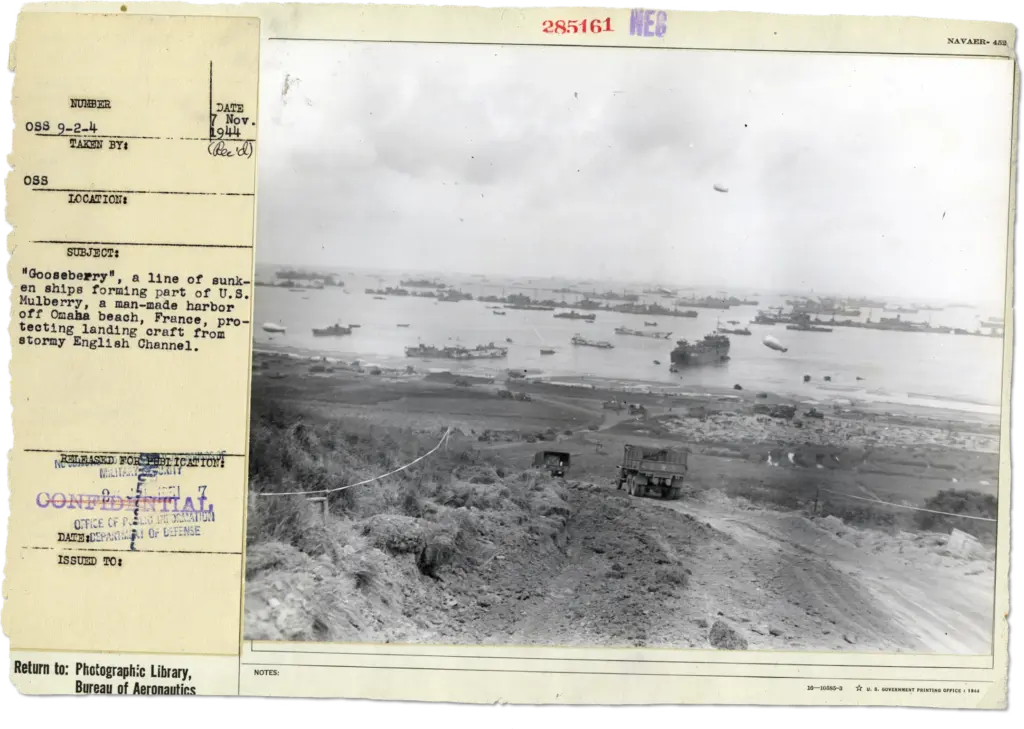
The absence of proper port facilities led to the employment of temporary harbours (Mulberries) constructed with prefabricated concrete caissons towed from England and positioned off Gold and Omaha beaches. They would be used until French ports could be captured and brought back into use. The Allied approach was largely underpinned by US industrial power which exploited the mass production of numerous systems, without which the operation would likely have been delayed beyond June 1944 with attendant challenges arising viz the Soviet position.
Comparison with today
Projection of force at any scale can garner advantage across the spectrum of conflict from ‘Grey Zone’ (sub-threshold) conditions through to high-intensity conflict. However, today’s technologies render the D-Day example almost unthinkable as human mass is largely absent in today’s operational conditions. Technology makes its employment more risky and simultaneously somewhat redundant in effect whilst political appetites make it a very high-risk option in all but authoritarian regimes. Cheap and powerful sensors linked to long-range strike systems would likely deny a force the opportunity to close up to a coastline and would compel forces to operate at range from the shore. Equally, the quality of such sensors compels forces ashore to avoid mass: they are too easily sensed – and thus potentially identified, acquired and engaged by adversary forces – and so they will seek to operate in a more dispersed and disaggregated fashion. All this isn’t to say that force projection at scale is now impossible, but it is unlikely to resemble Normandy 1944.
Manpower
Other considerations would affect the Allied endeavour. Manpower was not unlimited and whilst the USA could call on a bigger pool than the British, both nations employed conscription for the duration of the conflict and beyond. However, although domestic politics in the UK were largely overshadowed by the nature of the struggle, caution had to be exercised. British memories of the First World War were still relatively fresh and the appetite to foot the ‘butchers bill’ of combat was eroding as the war ground on. Whilst there was no question that the invasion of Europe would bring with it a significant casualty bill, a seemingly endless flow of casualties was extremely unpalatable politically, morally and socially.
Any post-war economic recovery would be centred on the availability of working-age men able to take their part in the regeneration of a peacetime economy. As a direct consequence of these considerations, there was a strong sense of the moral imperative to avoid casualties and so an implied policy of ‘steel not flesh’ prevailed in Allied circles. This would entail the employment of overwhelming force wherever possible and the use of heavy weapons and machinery in place of humans where circumstances allowed.
Comparison with today
In comparable modern operations, manpower deployed at the scale of that seen in 1944 would be unlikely, not least as technology has reduced the need for humans in many instances. What would have been manual tasks in many arenas in 1944 are more than likely to be automated today. Additionally, whilst some western nations are contemplating a return to some form of national service, the armed forces of NATO nations are almost wholly volunteer. And while some may have powerful reserves (e.g. Finland), the numbers of uniformed service men and women today are but a fraction of their 1944 forebears. Military service is not a particularly popular choice, as evidenced by under-bearings in many of the UK and European military services.
Technology and Doctrine
Over the span of the Second World War, the ability to conduct littoral operations advanced, with technology enabling the fielding of match-winning systems. The USA were the undoubted leaders in the development of amphibious warfare with significant investment in the creation of new doctrine, specialist equipment and training. This would inform the conduct of all of the major amphibious operations of the conflict. Across all domains, platforms and systems, capabilities were advanced at remarkable speed. It is of note that the British aircraft inventory at the outbreak of war still featured a number of biplanes and yet, within six years, a jet fighter had been successfully deployed. Likewise, the Germans had perfected the land/air battle with their use of armour to achieve shock, surprise and overwhelm, supported by agile ‘flying artillery’. Sadly for them, they lacked the scale of battle-winning capabilities to prevail across the two theatres – East and West. A significant proportion of German artillery was horse-drawn through to the end of hostilities and whilst their U-Boat operations were highly successful, they lacked the numbers of craft to successfully strangle supplies into Britain.
Comparison with today
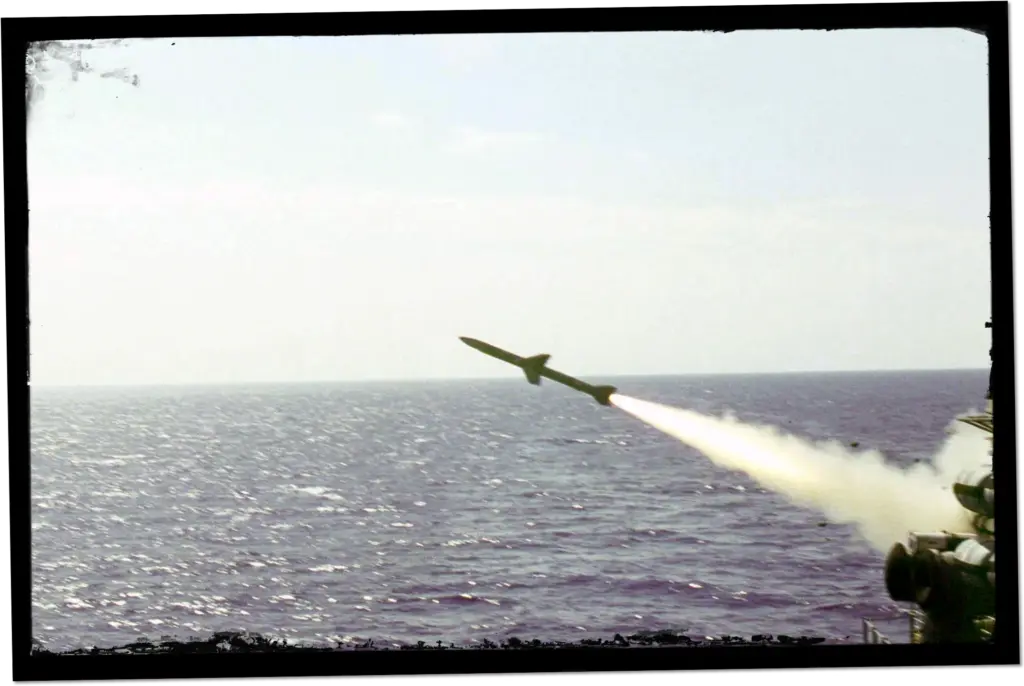
The (relatively) recent publication of conceptual pieces by the USN and USMC including ‘Littoral Operations in a Contested Environment’ (2017) and ‘Expeditionary Advanced Base Operations’ (2018) set out just how that doctrine has evolved to reflect the different challenges faced. These concepts describe the integrated application of US Navy and Marine Corps capabilities to overcome emerging threats within the littoral, addressing challenges created by potential adversary advantages in geographic location, weapons system range, precision and capacity. This is matched by an appetite for different capabilities including the fielding of a vast array of sensors, the employment of unmanned systems in all domains and increased lethality.
"Those that fail to learn from history are doomed to repeat it,"
- Winston Churchill
Range and Scale of Operations
Whilst Operation Overlord in June 1944 was, to a great degree, the turning point in an existential conflict, it is worthy of note that D-Day in Normandy had been preceded by numerous operations at differing scales. These ranged from the assault at Dieppe in 1942 (widely regarded as a military failure) to Operation Husky (the landings in Sicily in 1943 which were set on a grand scale and highly successful). In the Pacific theatre, the US conducted a series of amphibious operations as they ‘island-hopped’ across the ocean, dislodging the Japanese en route to the ultimate showdown on the home islands that ended with the dropping of nuclear weapons. Many of the brutal lessons learned during the fighting on Guadalcanal and Tarawa would inform the Allied approach to their operations in Europe.
Comparison with today
Operations in the littoral today would probably be unrecognisable to the 1944 practitioners as today’s adversaries fight very differently, largely enabled by technological advances. This is characterised by comprehensive, immersive, active surveillance networks alongside passive surveillance detection and classification systems. These are enabled by large numbers of low-cost sensors across all domains, the whole feeding into a modular, hard-wired, networked and integrated hard and soft kill protection system including highly capable short, medium and long-range strike systems.
In addition, today’s Allied forces can expect to encounter peer-level military capabilities designed to bypass traditional Western strengths (particularly in terms of platforms, technology and connectivity) with equal or superior force ratio numbers, shorter lines of communication and hard-wired infrastructure. And whilst scale is simply a reflection of the nature of the task in hand, it is unlikely that today’s operators would be present in the littoral at the same scale and in the same concentrations as seen in 1944. Disaggregation allows forces to negate adversary advantages in the sensor coverage described above to operate discreetly and, with the potential to leverage remote and unmanned systems, can achieve effect without the need for grand scale.
Disaggregation of forces into small teams creates myriad challenges in any operational context from Grey Zone through to open hostilities, particularly those that require operators to remain undetected while operating within an adversary’s Weapons Engagement Zone (WEZ). But it is often worth it – a small cohort of high-calibre individuals with improved training, appropriately networked and with access to an assembly of organic, remote and autonomous systems, can have effects out of proportion to their size, contributing to wider maritime missions including sea control and maritime strike. As the nature of warfare changes from 1944 to now, so too must the way we prosecute it.
The expansion of the ‘Grey Zone’ also marks a shift in the change in the Range and Scale of Operations. The ‘Grey Zone’ (or sub-threshold) is a term given to operations which offer the potential of low-profile and even deniable effect but can contribute to a wider strategic intent or shape a broader narrative. Such operations can be wide-ranging, from cyber-attacks through coercion to broader information operations including propaganda. In opposition to the all-out warfare seen during WW2, modern operators use this Grey Zone to achieve objectives without triggering hostilities, frequently referred to as ‘hybrid’ warfare.
1USN N5C/MCWL Navy and Marine Corps Concepts; Littoral Operations in a Contested Environment, 2017
2Expeditionary Advanced Base Operations (EABO) Handbook, Considerations for Force Development and Employment, 1 June 2018
Chapter 1 Picture Credits
- Normandy 1944; Courtesy of The National WWII Museum
- Normandy 1944; Courtesy National Archives, NAID 6682629
- Mulberry Harbour in Operation, Normandy 1944; Courtesy National Archives, NAID 219775795
- A RIM-7 Sea Sparrow is launched from the aircraft carrier USS
Kitty Hawk; Courtesy National Archives, NAID 6609950
